
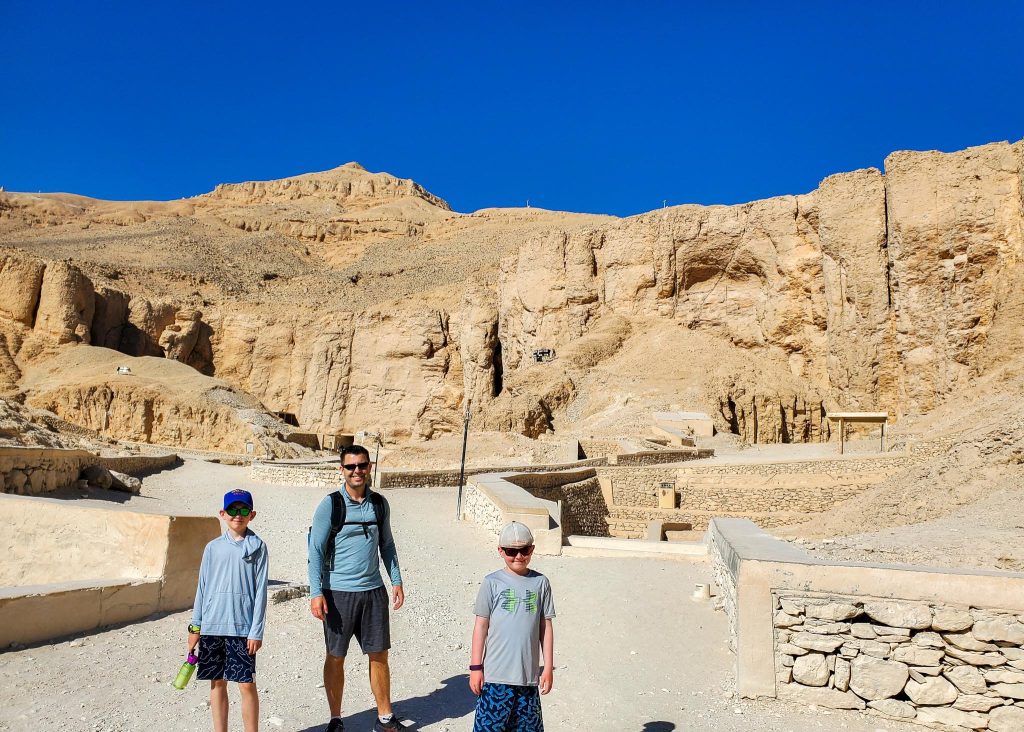
The Valley of the Kings is one of those places that doesn’t reveal much at first glance. From the outside, it’s a barren landscape—sunbaked hills with small, unassuming openings carved into the rock.
But step inside, and everything changes.
As you enter the tombs, a sense of mystery settles in. Elaborate, vividly painted passageways lead you deep into the limestone hills, where the final resting places of some of ancient Egypt’s most famous pharaohs have remained hidden for thousands of years.
Each has its own story, history, and surprises, making it a day full of discovery. Read more to find tips on how to plan your visit to the Valley of the Kings, and a look at the tombs we explored as a family.
The Valley of the Kings
Located in the hills on the west bank of the Nile River, the Valley of the Kings is one of the most impressive archaeological sites to visit in Luxor, Egypt.
The tombs were built during the New Kingdom of Ancient Egypt, spanning roughly 500 years from approximately 1539 BCE to 1075 BCE. These burial sites were carefully constructed to house the mummy, treasures, and artifacts each ruler believed they would need in the afterlife. Some of the most well-known pharaohs buried here include those from the Seti and Ramesses dynasties, as well as Tutankhamun.
History of the Valley of the Kings
More than a thousand years earlier, during the Old Kingdom, pharaohs built their elaborate tombs inside pyramids. However, by the time of the New Kingdom, many of these tombs had been looted, prompting a shift in the design of royal burials.
The west bank of the Nile, near Luxor (ancient Thebes), was chosen for several reasons. Thebes was the religious center of the New Kingdom, and the west bank—where the sun sets—was associated with the afterlife and the entrance to the underworld.
The surrounding landscape also played an important role. The peak of al-Qurn rises above the valley in the form of a natural pyramid, a divine symbol, without the need to construct one. Tombs were carved deep into the limestone hills with hidden entrances to better protect them from grave robbers, and the dry climate and soft stone allowed for intricate carvings and paintings that have been remarkably well preserved.
Planning Your Visit to the Valley of the Kings
There are currently 63 numbered tombs in the Valley of the Kings, with additional discoveries still being made. Of these, around 20 are royal tombs, while the rest belong to nobles and members of the royal court.
Tombs are labelled with “KV” (Kings’ Valley), followed by a number indicating their order of discovery. For example, Ramesses VII is in KV1, as it was the first tomb identified.
Only 10–12 tombs are open to the public at any given time, and these rotate to help preserve the artwork.
The Visitor Centre
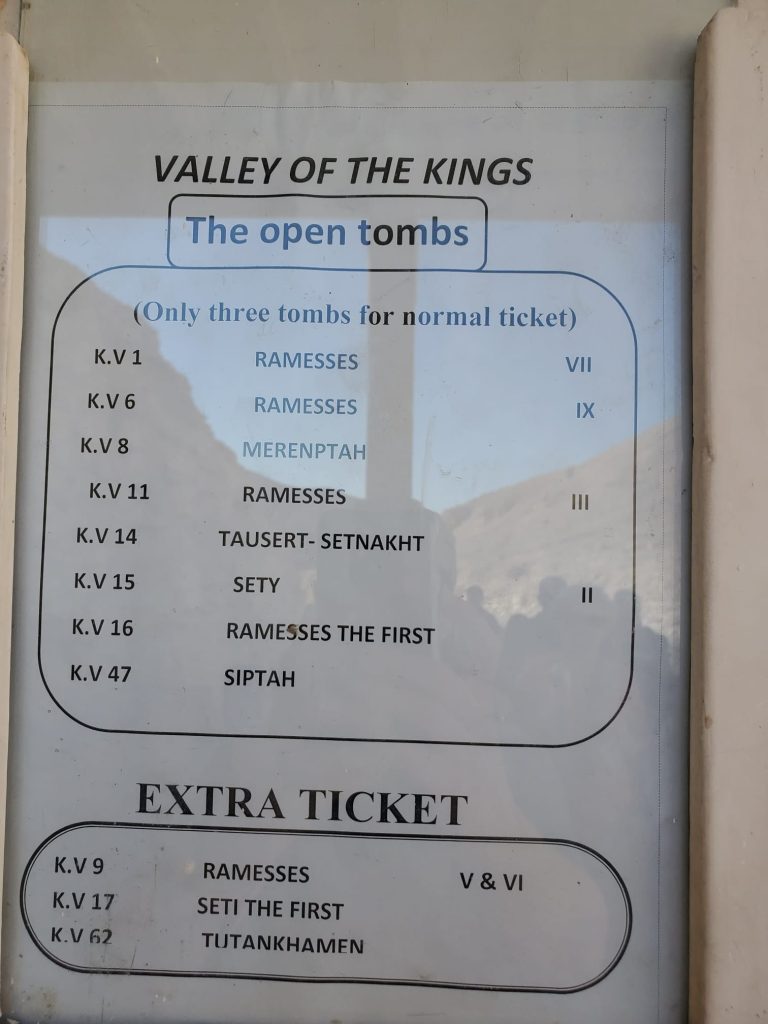
When you arrive at the Visitor Centre, you’ll find a sign showing which tombs are open that day.
Your standard entrance ticket allows you to visit three tombs. If you’d like to see more, you’ll need to purchase additional tickets in advance.
There are also three tombs not included in the standard entrance ticket and require separate tickets. These are often considered some of the most impressive in the valley:
• Ramesses V & VI (KV9)
• Seti I (KV17)
• Tutankhamun (KV62)
You’ll also purchase:
• tram tickets (required to reach the site entrance)
• a photography pass if using a DSLR camera*. Camera phones do not require a photography pass. *Note: Recently, I have read that the photography pass is no longer required.
From the Visitor Centre, a short 5-minute tram ride takes you into the valley.
Remeber: Plan ahead. All tickets must be purchased at the Visitor Centre. If you decide later that you want to visit more tombs, you must return to the Visitor Centre.
Getting Around the Valley
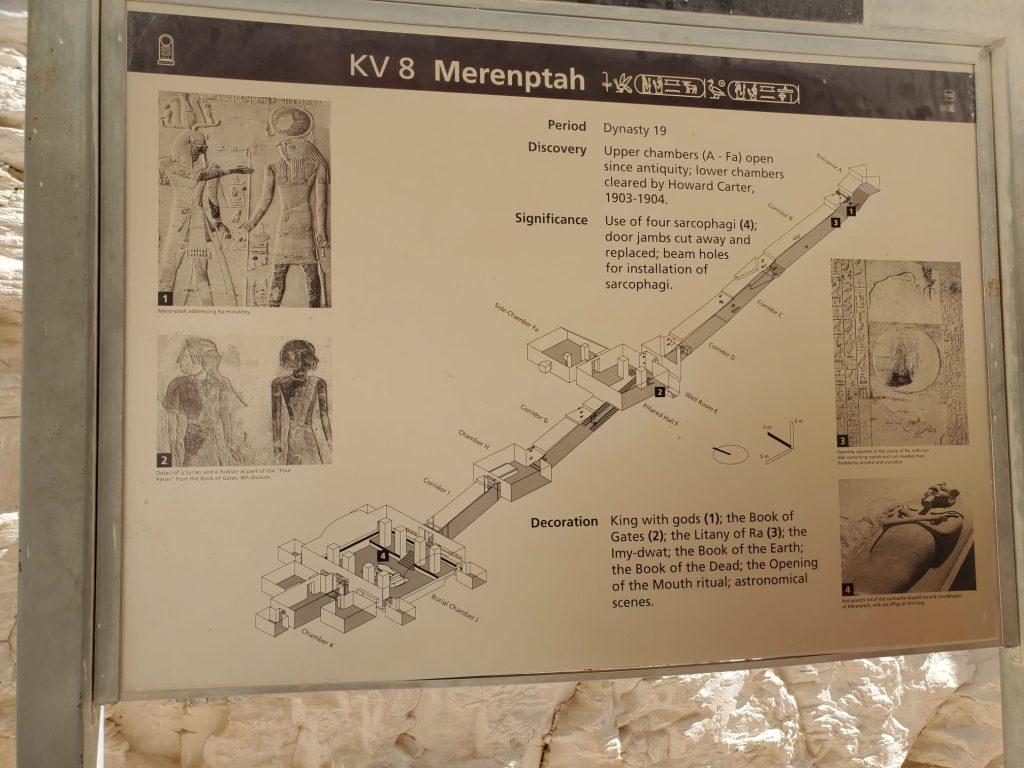
Now that you have your tickets and have arrived at the Valley of the Kings, you are ready to visit the tombs. The entrances to the tombs are marked with simple signs that include the name of the pharaoh, a map of the tomb, and a brief history.
The site is larger than it first appears, so it’s helpful to take a photo of the map at the Visitor Centre to locate the tombs you want to visit.
Our Visit to the Valley of the Kings
Based on availability and some research ahead of time, we chose to visit:
• Merenptah (KV8)
• Ramesses III (KV11)
• Tausert & Setnakht (KV14)
We also purchased an additional ticket for:
• Ramesses V & VI (KV9)
Merenptah (KV8)
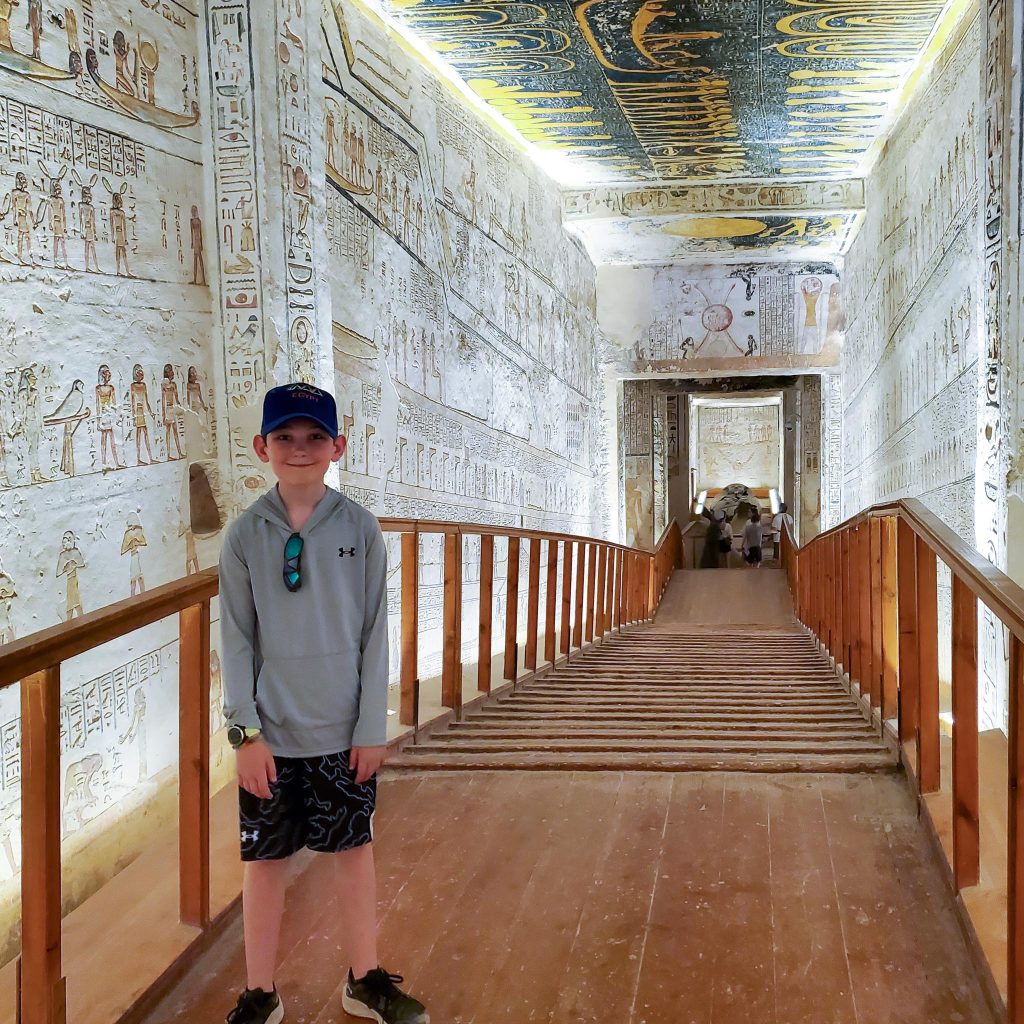
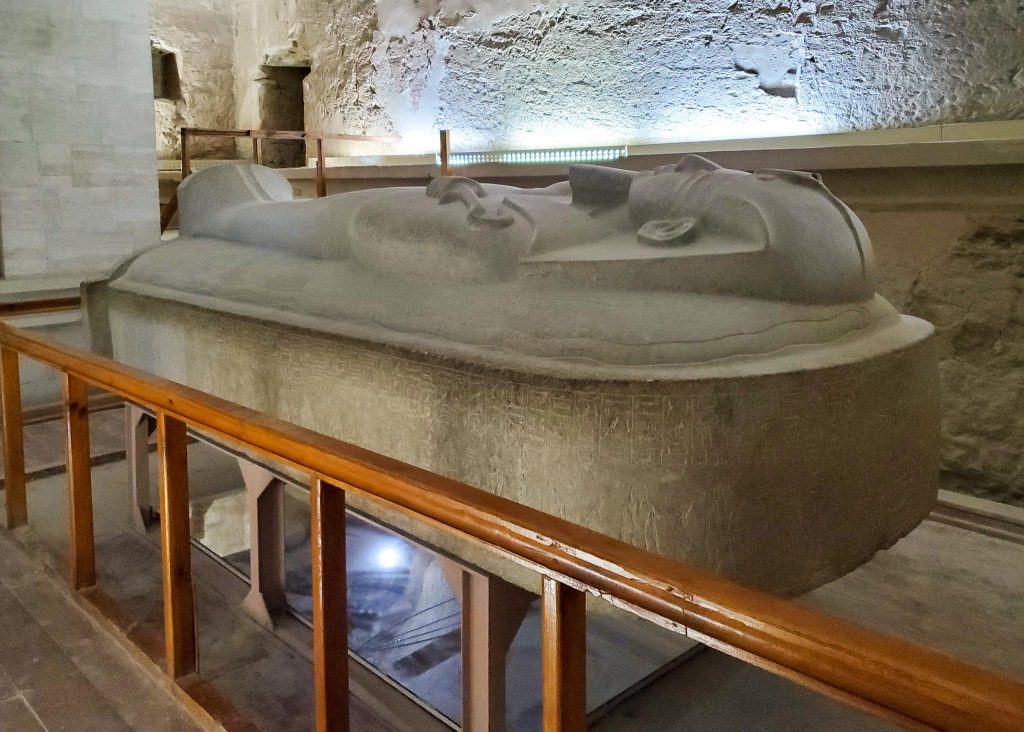
Merenptah’s tomb is the second largest in the Valley of the Kings and was built for the son of Ramesses II.
The tomb follows a long, straight passage that descends deep into the mountain. While known for its architectural grandeur, some of the detailed carvings in the lower sections were damaged by ancient flooding.
At the end, a large burial chamber remains, though the mummy of Merenptah has been moved to the National Museum of Egyptian Civilization in Cairo.
Ramesses III (KV11)
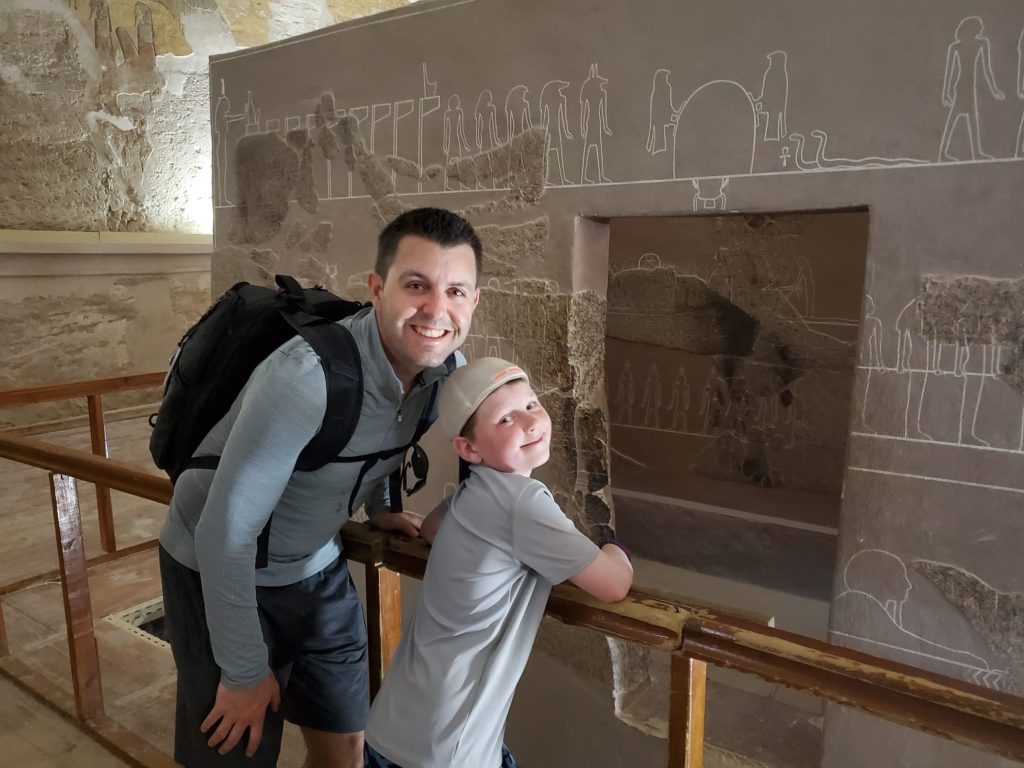
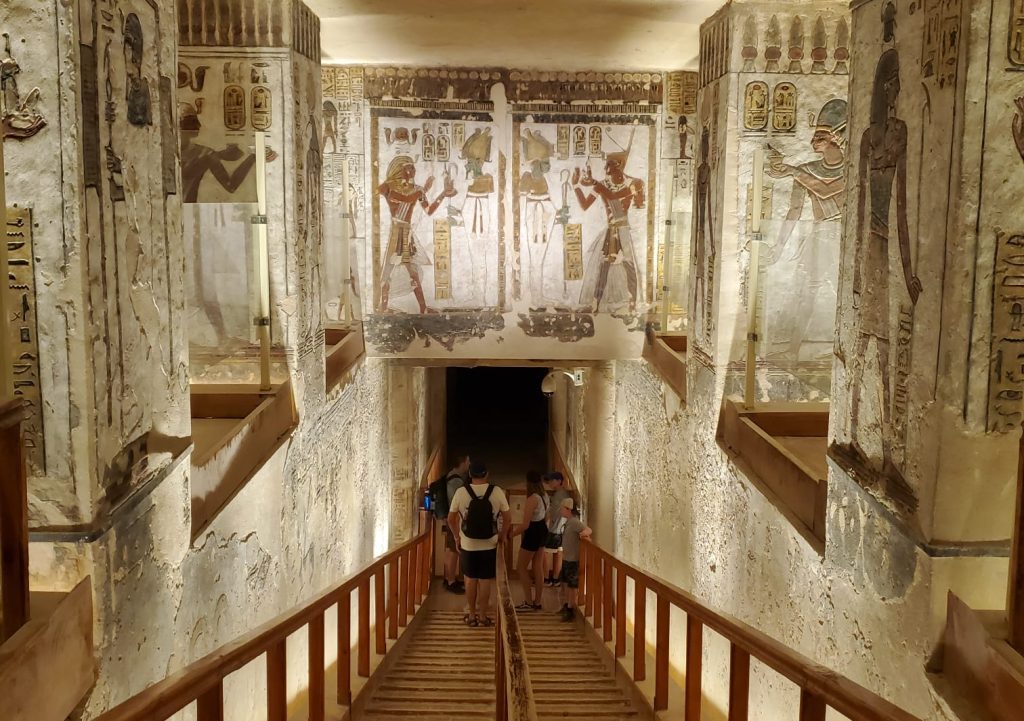
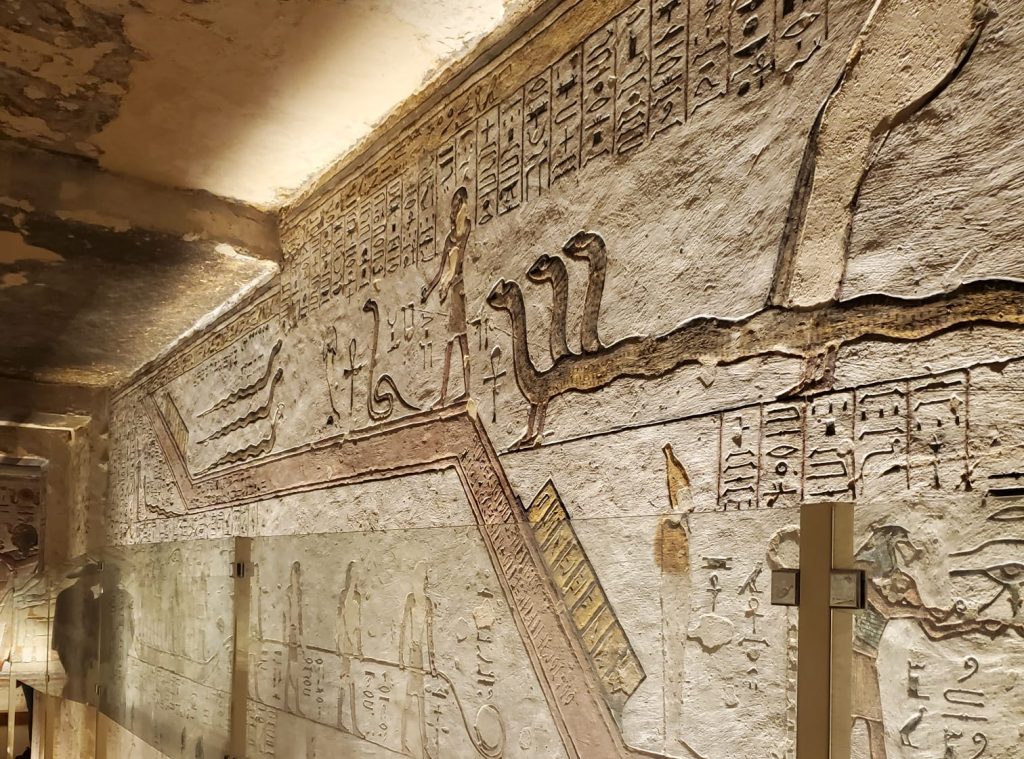
Ramesses III’s tomb stands out for its artwork, which includes more scenes of daily life than many other royal tombs.
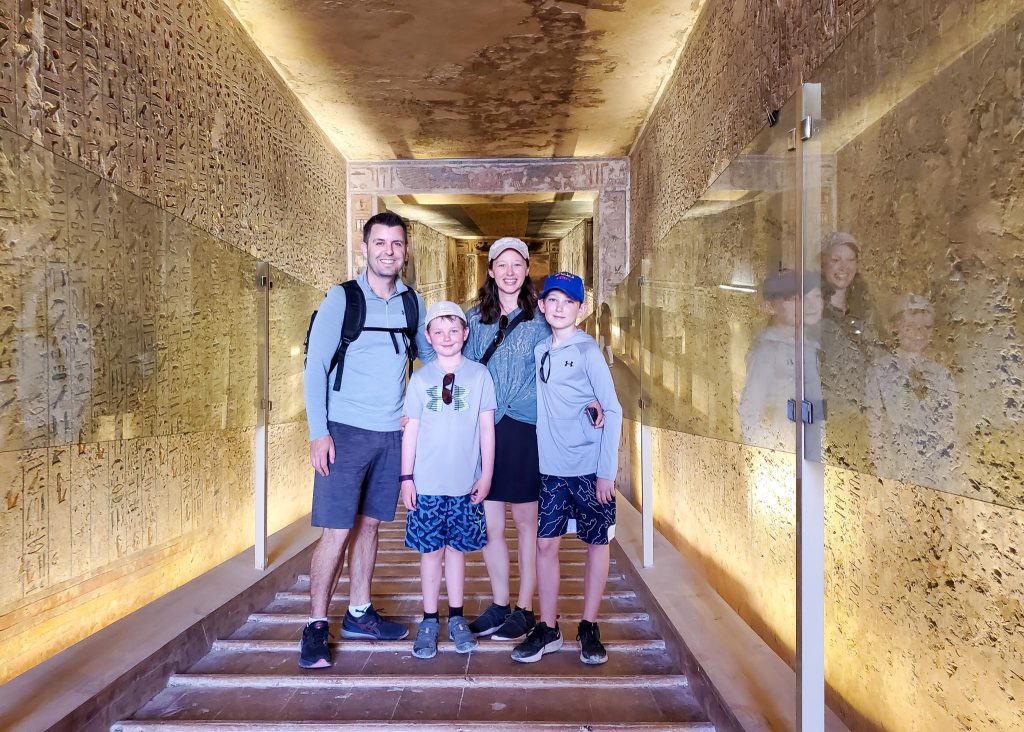
The corridors remain vibrant, with many sections protected behind glass. As you make your way deeper inside, the passage opens into a vast burial chamber supported by large, decorated pillars.
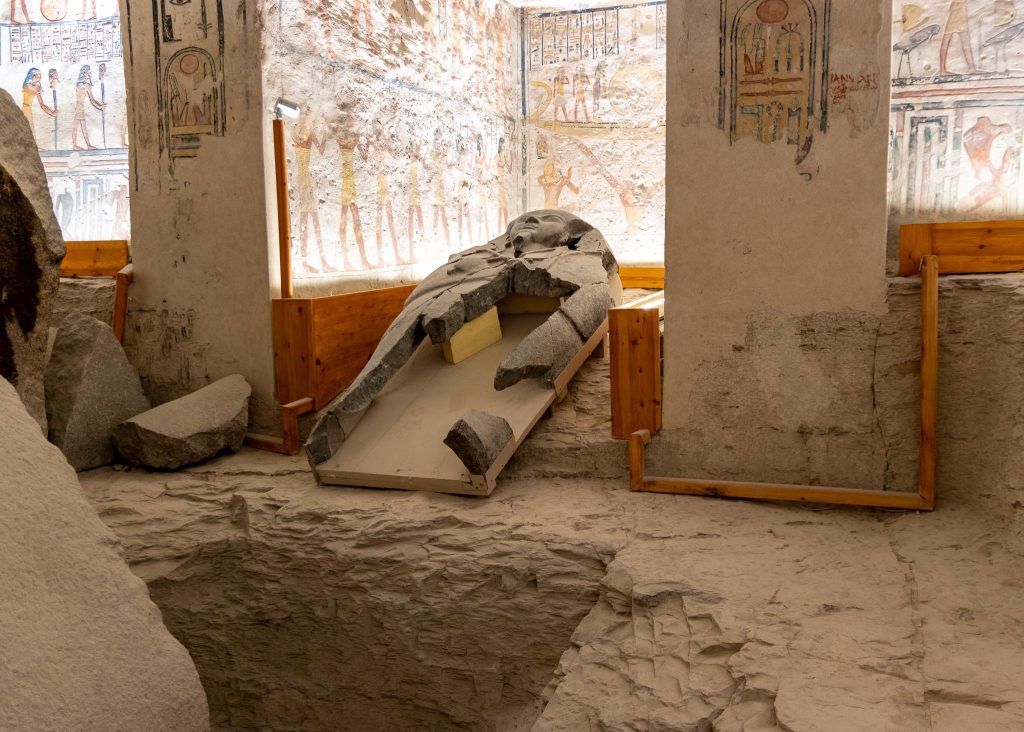
Although the sarcophagus is no longer present, the chamber’s scale and detail make it one of the more memorable tombs to explore.
Fun Fact: Nicknamed the “hijacked” tomb, KV11 was originally started for Ramesses III’s father. After builders accidentally broke into the ceiling of an adjacent tomb (KV10), the project was abandoned. Rather than starting a new tomb, Ramesses III took over the site and altered the layout, creating the sharp turn seen in the corridor today.
Tausert & Setnakht (KV14)
This massive tomb was built for two rulers: Queen Tausert—one of the few female pharaohs—and her successor, Setnakht.
Like many tombs in the valley, the entrance is easy to miss, appearing as a simple ramp leading underground. But once inside, the colour and detail are striking.
The walls and ceilings are covered in intricate hieroglyphics and artwork, and we were surprised by just how much there was to take in. Every surface seemed to tell a story.
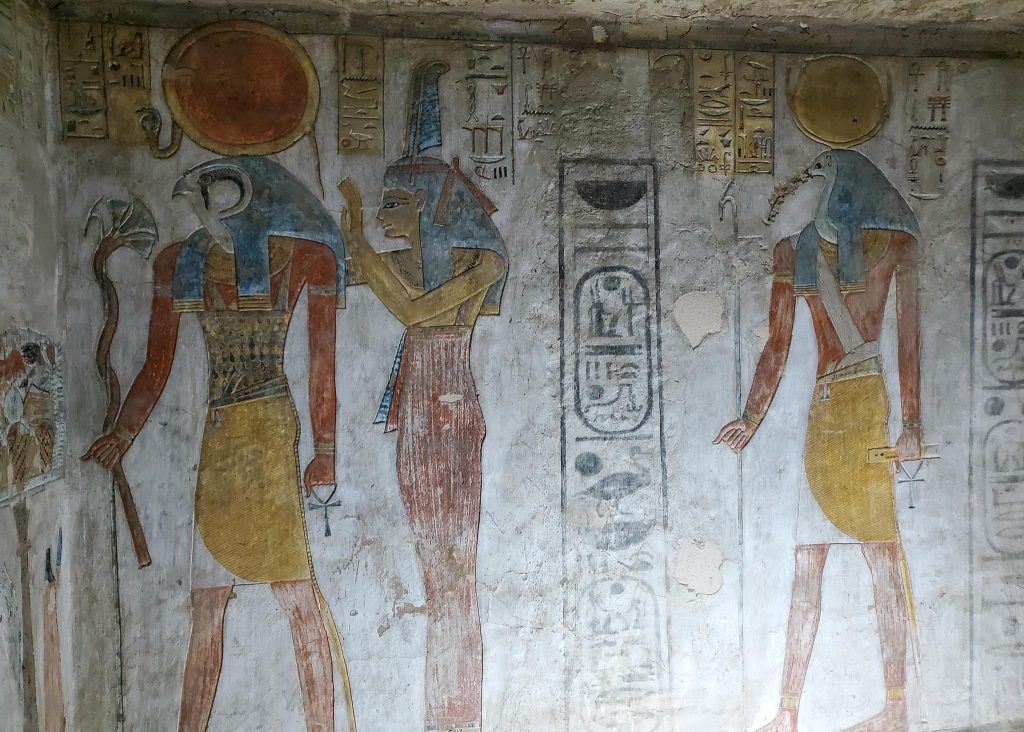
Ramesses V & VI (KV9) – Extra Ticket
This was our favourite tomb of the day and was well worth the additional cost.
This is also a shared tomb, making it one of the largest in the valley. It was originally started by Ramesses V and later expanded by his uncle and successor, Ramesses VI, who adapted it for his own burial.
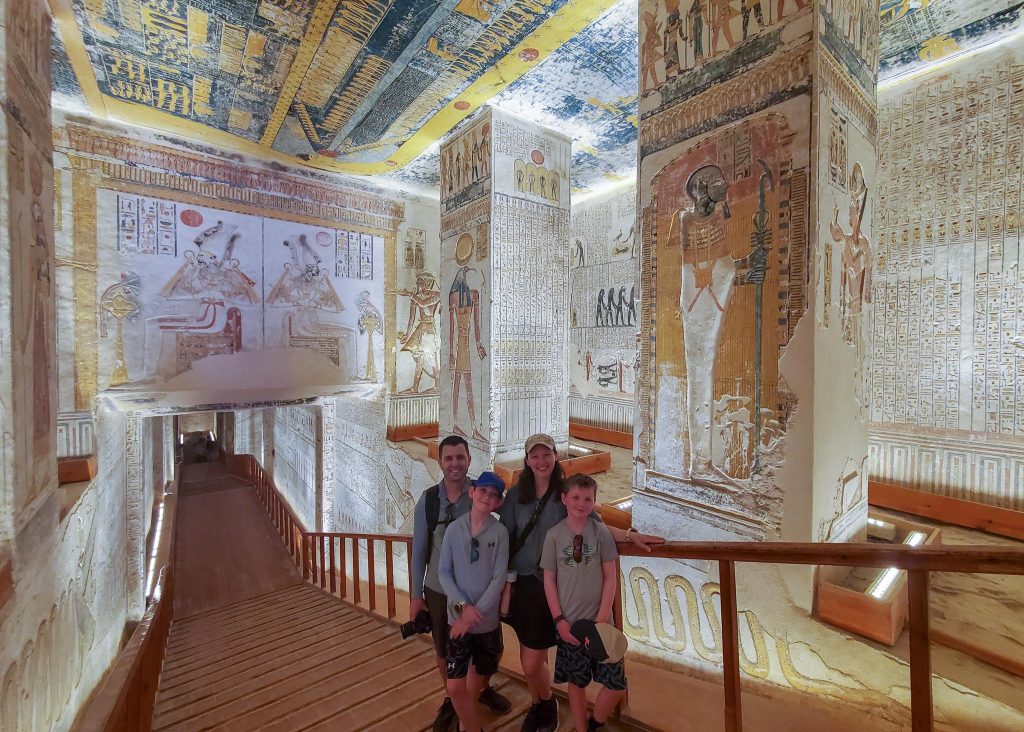
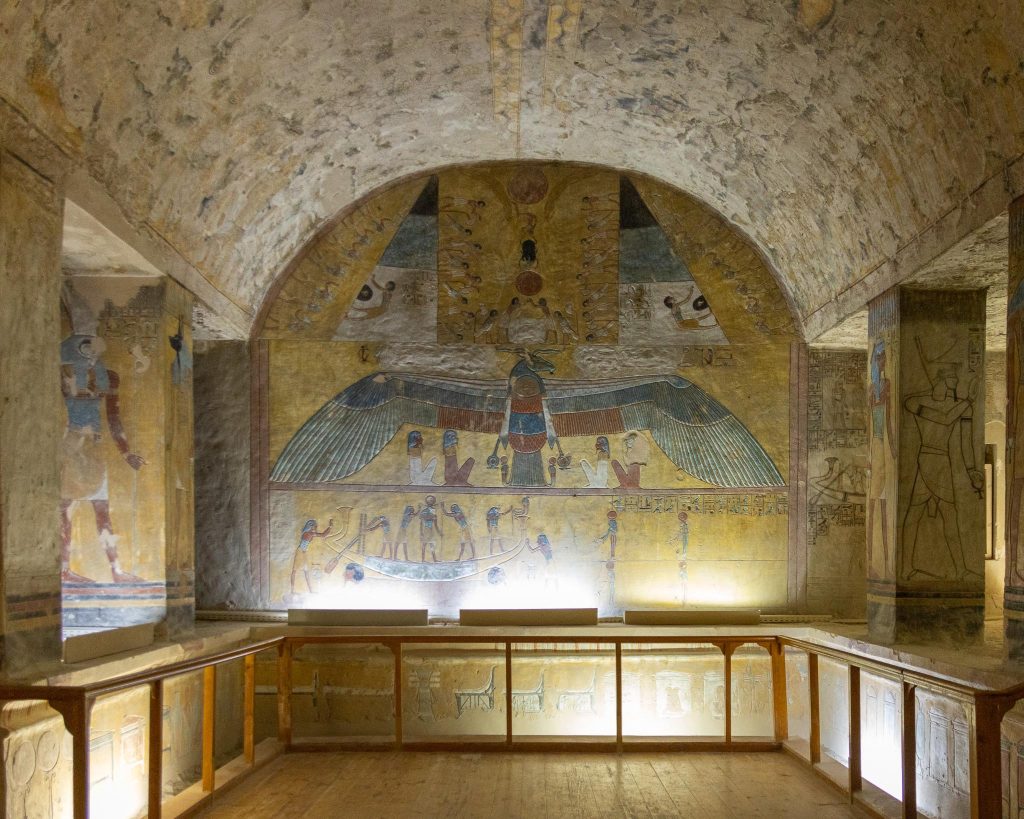
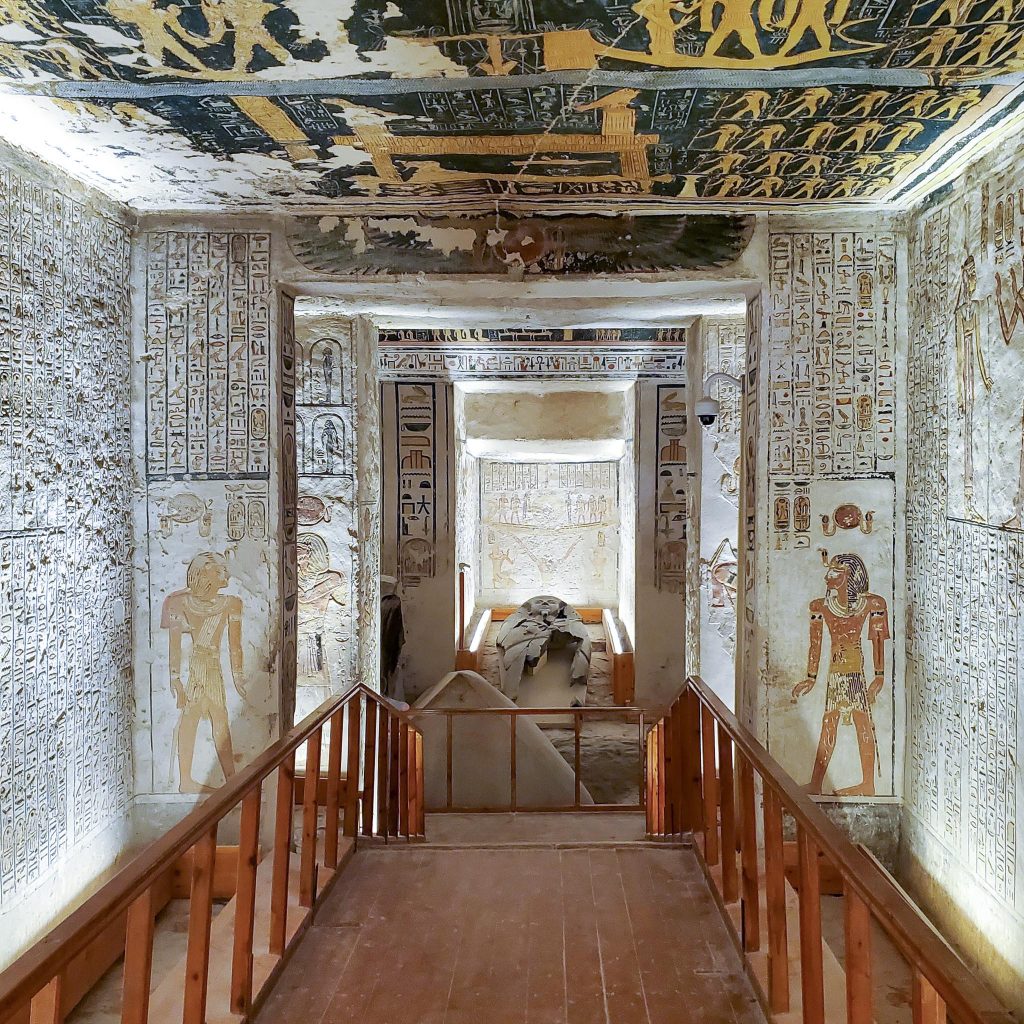
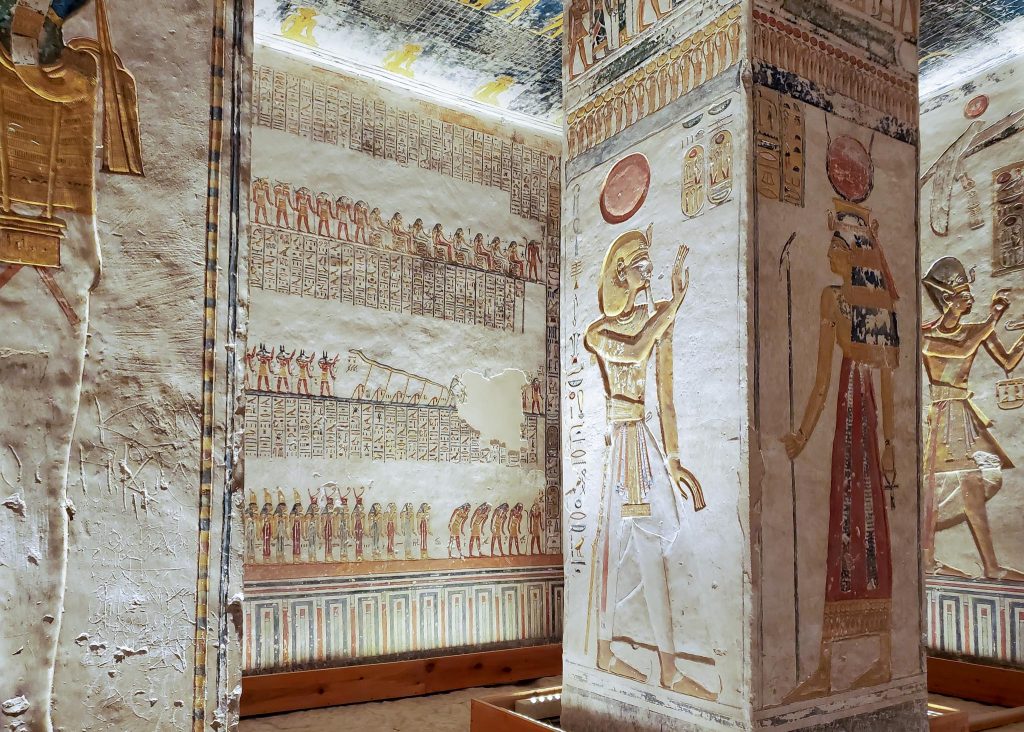
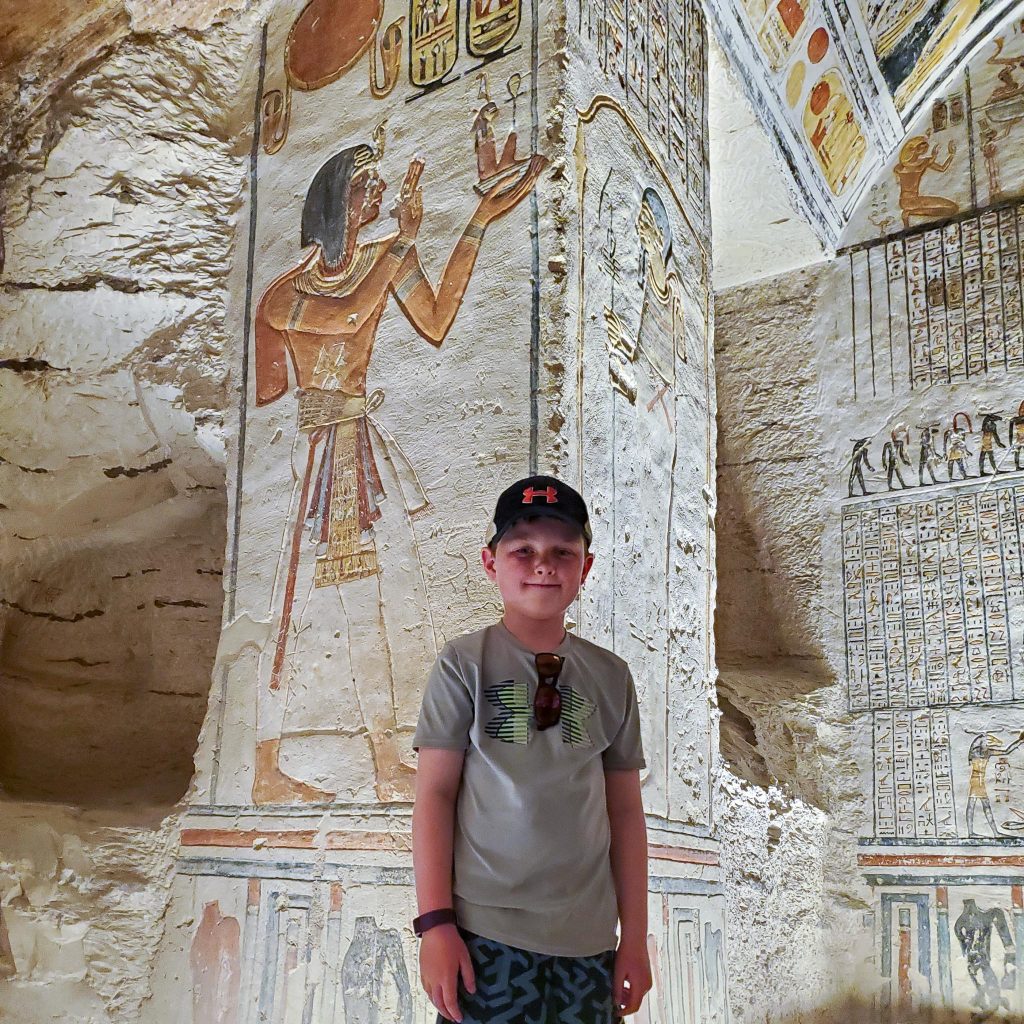
KV9 is considered one of the most spectacular tombs in the valley due to its vibrant colours and exceptional preservation. Much of the artwork remains intact, giving you a clear sense of how these tombs once looked.
The long corridors, deep blue ceilings filled with golden symbols, and the enormous burial chamber were especially impressive. One section lined with detailed pillars stood out as a highlight.
Fun Fact: KV9 is sometimes referred to as the “protector” of King Tut’s tomb. During its construction, debris was dumped over the entrance to Tutankhamun’s tomb (KV62), helping to hide it from grave robbers for over 3,000 years.
Tombs to Consider
King Tut (KV62)
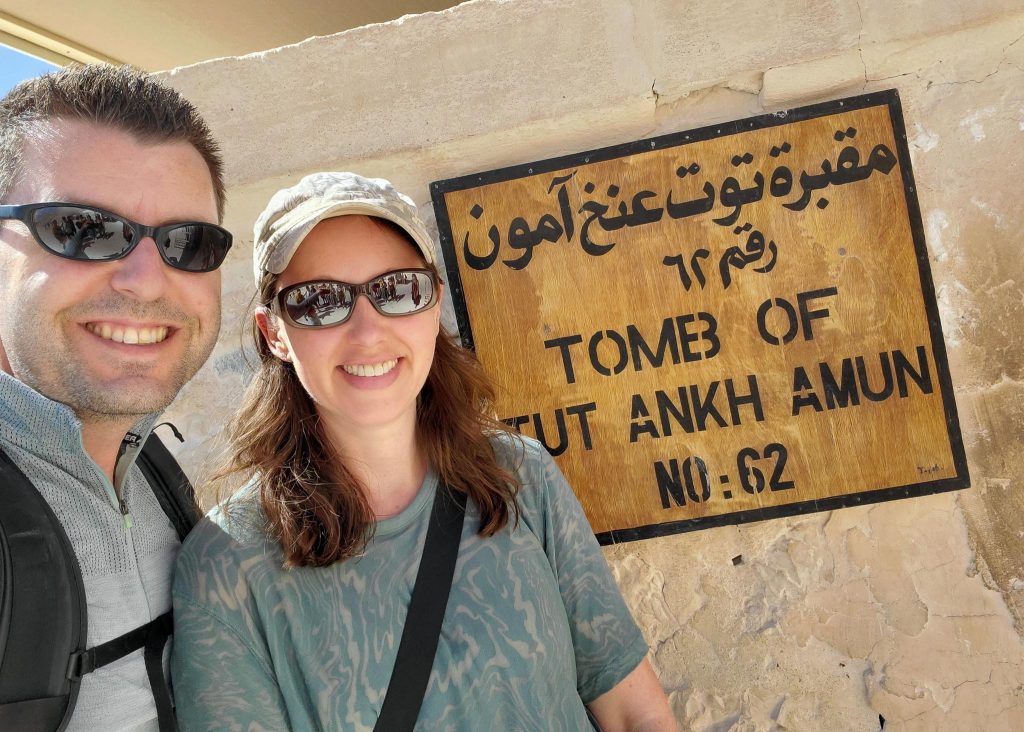
Tutankhamun became pharaoh at just nine years old and died about a decade later. While his tomb is one of the smallest in the valley, it is among the most famous due to the incredible number of artifacts discovered inside.
We chose not to visit, as most of the treasures have been moved to the Grand Egyptian Museum in Giza. However, if you’re interested in seeing a mummy, King Tut’s mummified body remains in the tomb for visitors to view.
Ramesses IV (KV2)
One of our top choices, Ramesses IV, was closed during our visit.
It’s known for its large pink granite sarcophagus, as well as its vibrant colours and detailed artwork—especially on the ceilings, where golden symbols stand out against a deep blue background. Many say the colours look almost newly painted despite being over 3,000 years old.
Tips for Visiting the Valley of the Kings
Arrive early: The site opens at 6:00 am. By mid-morning, tour buses arrive and lines begin to form. Even during our visit in early 2022—when many places were still quiet following COVID—the Valley of the Kings (along with the Great Pyramids) was one of the few sites where we encountered crowds.
Plan your tombs: Your entrance ticket includes access to three tombs, so it’s worth doing a bit of research in advance and making a short list of those that interest you most.
Timing: Expect to spend 15 to 20 minutes in each tomb, depending on its size and level of interest. We explored four tombs and the surrounding grounds for two hours.
Heat & sun: Even in the early morning, the sun can be intense, and there is very little shade as you walk between tombs. Inside the tombs can also get hot. Bring plenty of water, hats, and sunscreen.
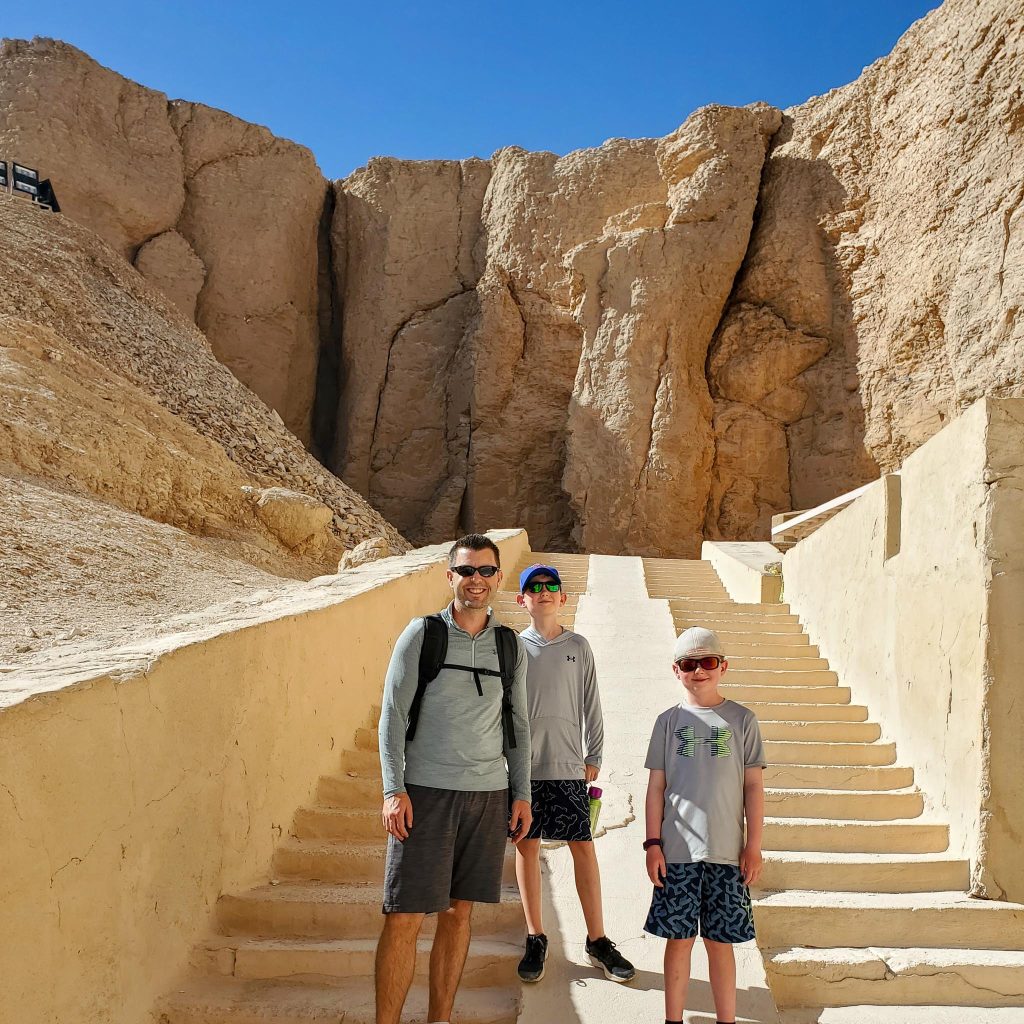
Wear comfortable shoes: Many of the tombs are built deep into the hillside with long hallways and staircases, so you’re sure to get your steps in for the day!
Consider a guide: Egyptologists are available if you want a deeper historical context. For our family, we enjoyed snapping photos and soaking in the atmosphere. Note: I have read that guides are not permitted inside the tombs, so be sure to ask prior to hiring.
Photos: Attendants may offer to take family photos for you, but they’ll expect a tip in return. Best to be prepared, or simply keep the camera in your own hands.
Bathrooms: Bathrooms are found at the Visitor Centre, so go before you head out on the tram. There are a few portable bathrooms near the tram drop-off area if needed. Be sure to carry some Egyptian pounds for tips.
Getting to the Valley of the Kings
There are several ways to reach the Valley of the Kings:
Tour Company: Many companies offer guided day trips to the Valley of the Kings and other sites on the West Bank, including private transportation.
If you prefer to go it alone, you can:
Take a Taxi: From Luxor’s main tourist area (near Luxor Temple), the drive takes about 45 minutes, as you must cross Luxor Bridge.
Hire a Boat: You can take a boat across the Nile (about 15 minutes), then hire a taxi on the west bank. Boat taxis can be found at the docks across the street from Luxor Temple, and some hotels offer pickup at their marinas. Once on the west side, there is a small traffic circle with taxis waiting to take you to whichever attractions you wish to visit. Depending on your plan, you can negotiate a driver for half or a full day and have them wait for you between sites.
We opted for the boat trip and were picked up directly from our hotel. The boat ride was a fun start to the day for the boys, and the early morning breeze made for a relaxing crossing. Once across, we negotiated a half-day taxi, as we also planned to visit Hatshepsut Temple.

HatshepsutTemple
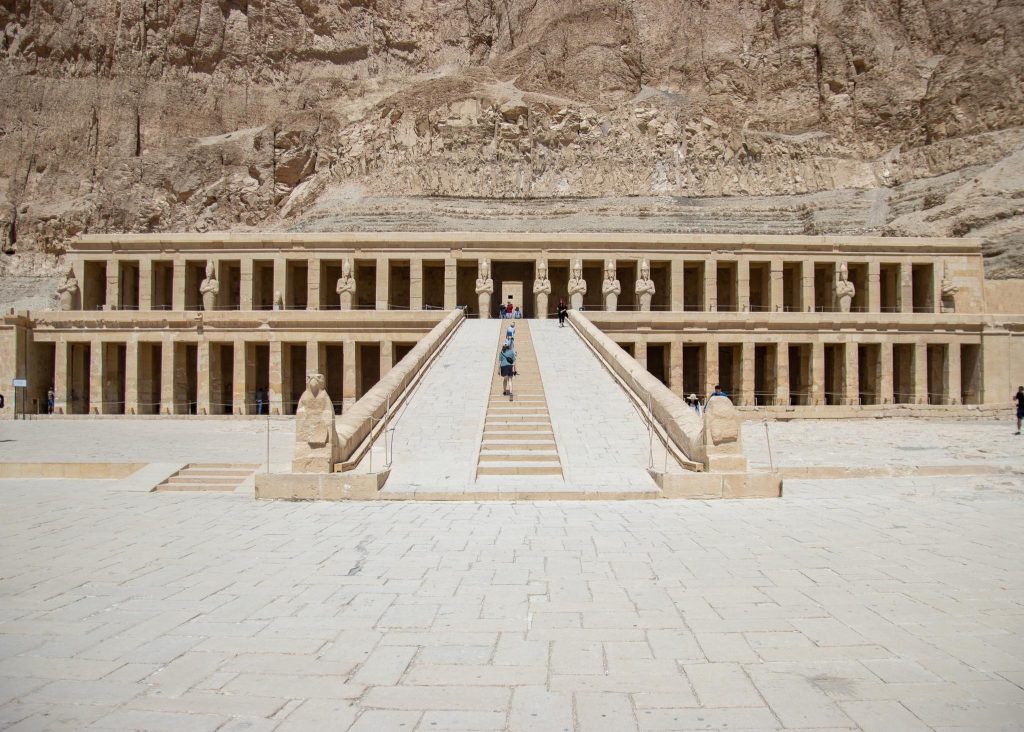
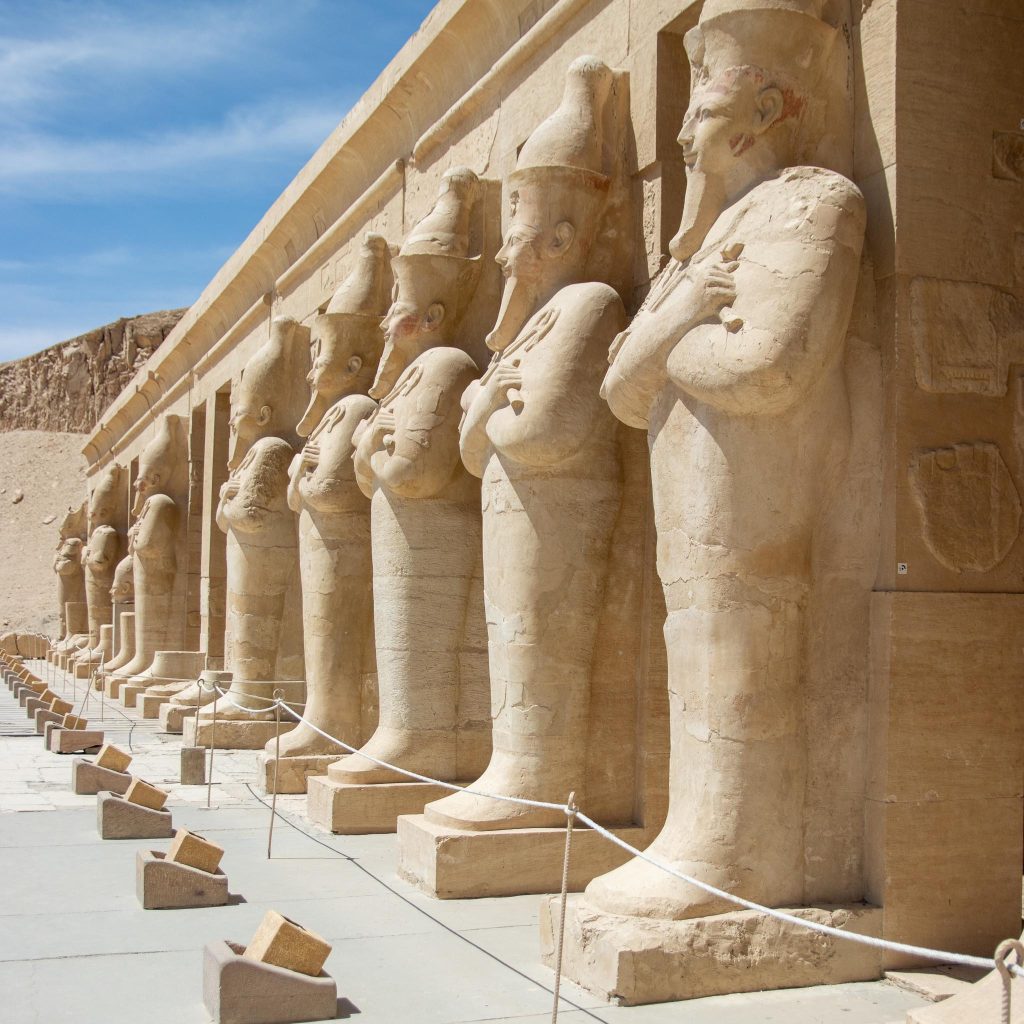
If you have time, the Temple of Hatshepsut is well worth adding to your visit.
Built for Queen Hatshepsut, one of the few female pharaohs, the temple is known for its dramatic design. Its three-tiered terraces rise directly from the limestone cliffs, creating a striking contrast to the hidden tombs just over the hill.
From a distance, the structure is instantly recognizable, and from the upper terraces, the views of the surrounding mountains are beautiful.
We didn’t stay long due to the heat, but about one hour is enough to explore comfortably.
Touring Egypt with Kids
Temperatures in Luxor soared into the mid-40s °C (over 110°F) during our visit in April, making daytime touring nearly impossible. With kids in tow, we knew we couldn’t spend long days exploring, so we planned early-morning visits.
Arriving early not only helped us beat the worst of the heat, but we often found the sites almost entirely to ourselves.
Where We Stayed in Luxor
We stayed at the Steigenberger Nile Palace, a 5-star resort overlooking the Nile. This property features a large pool, sundeck, three restaurants, spa, and gym facilities. Breakfast and dinner were included, making the logistics easy. Although we typically prefer to stay in apartments, this was a nice treat. And with soaring temperatures, the ability to explore the ancient ruins in the early morning and evening, and to enjoy refreshing pool days in between, made all the difference for the boys.

Beneath the Surface of Ancient Egypt
From the outside, the Valley of the Kings may look like a quiet stretch of desert hills—but inside, it tells a very different story. Walking through the tombs, surrounded by vibrant colours and intricate carvings, it’s hard to believe these spaces have existed for thousands of years—a place where history is hidden in plain sight.
Each tomb offered something unique—from vast chambers and towering pillars to detailed artwork that still feels alive today. For the boys, exploring the colourful, winding passageways was an adventure that left a lasting impression and gave them a chance to learn more about life in ancient Egypt.
Ready to Explore Egypt?
Check out these related posts to help plan your trip:
• Discovering Egypt’s Pyramids with Kids
• 3 Days in Cairo with Kids
• Exploring Egypt’s White Desert and Whale Valley
• Karnak Temple in Luxor: Tips for visiting with Kids
• Visiting Aswan’s Philae Temple with Kids