
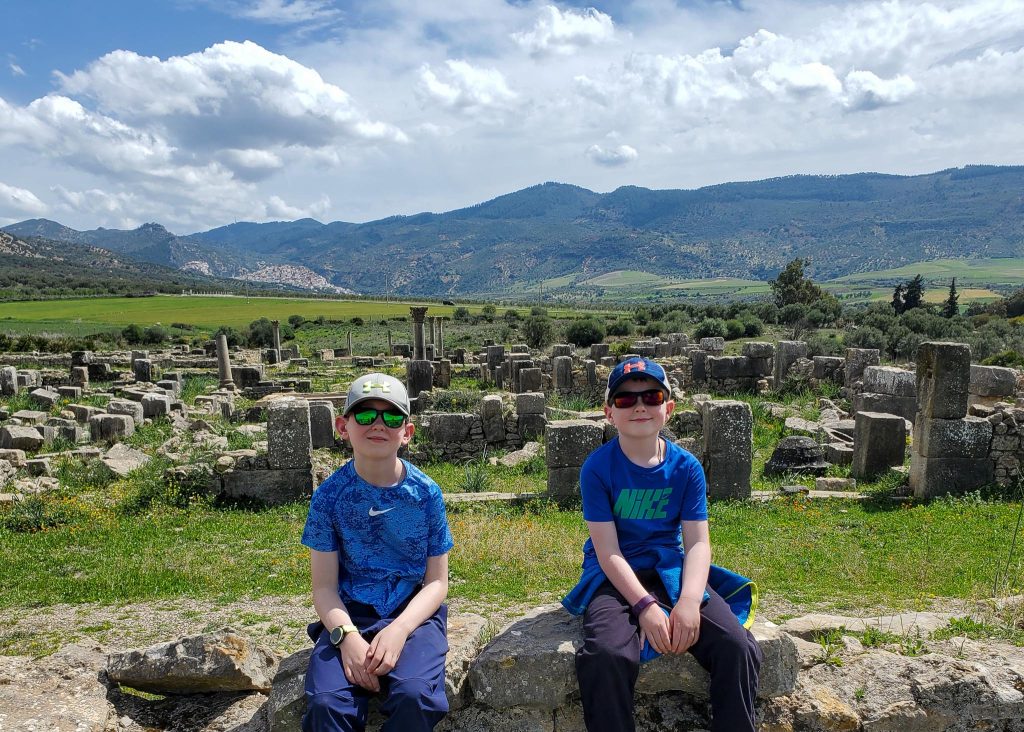
Morocco is known for its bustling medinas, desert landscapes, and dramatic coastline, but Volubilis offered something entirely different. Surrounded by rolling green hills and farmland, the ancient Roman ruins became one of those places that quietly stood out—not for their grandeur, but for their setting and atmosphere. The site felt less like a museum and more like a walk through the past, making it an easy and engaging stop for kids.
A Brief History of Volubilis
Volubilis dates back over 2,000 years and was once a thriving city on the western edge of the Roman Empire. Originally settled by the Berbers, it became an important Roman outpost in the 1st century AD, largely due to the area’s fertile land and successful olive oil production, which was exported across the empire.
At its height, Volubilis was home to grand public buildings, private villas, bathhouses, and an advanced aqueduct system that supplied water throughout the city. As Roman influence declined in the 3rd century, the city was gradually abandoned. Today, the ruins remain remarkably well-preserved, offering a clear glimpse into daily life during the Roman period.
Our Visit to Volubilis
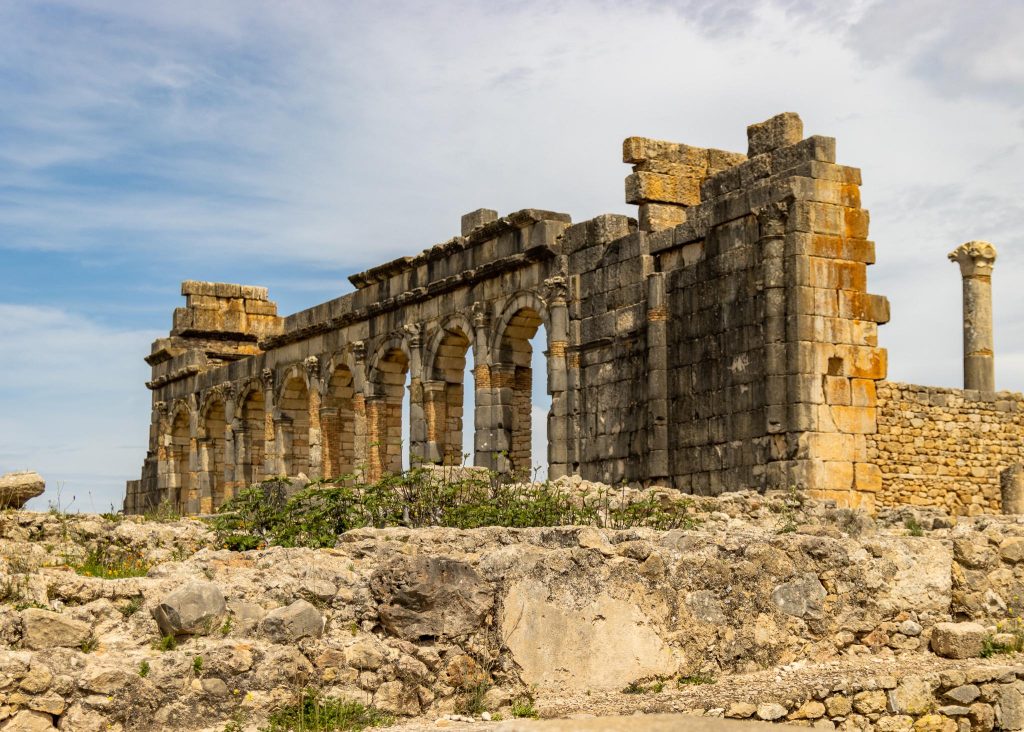
Located about 45 minutes from the city of Meknes, Volubilis is one of Morocco’s most impressive Roman archaeological sites. Walking down a stone pathway into the grassy valley where the ruins stand, we were met with towering columns and wide-open views of farmland and rolling hills. For a moment, it felt as though we had been transported far from the Morocco we had experienced so far—a reminder of just how far the Roman Empire once reached.
One of the most striking aspects of Volubilis is its openness and walkability. Unlike some archaeological sites that feel fenced in or crowded, this one invites you to wander at your own pace. Our boys enjoyed climbing on and around fallen stones and decorative mouldings, finding the colourful
What to See at Volubilis
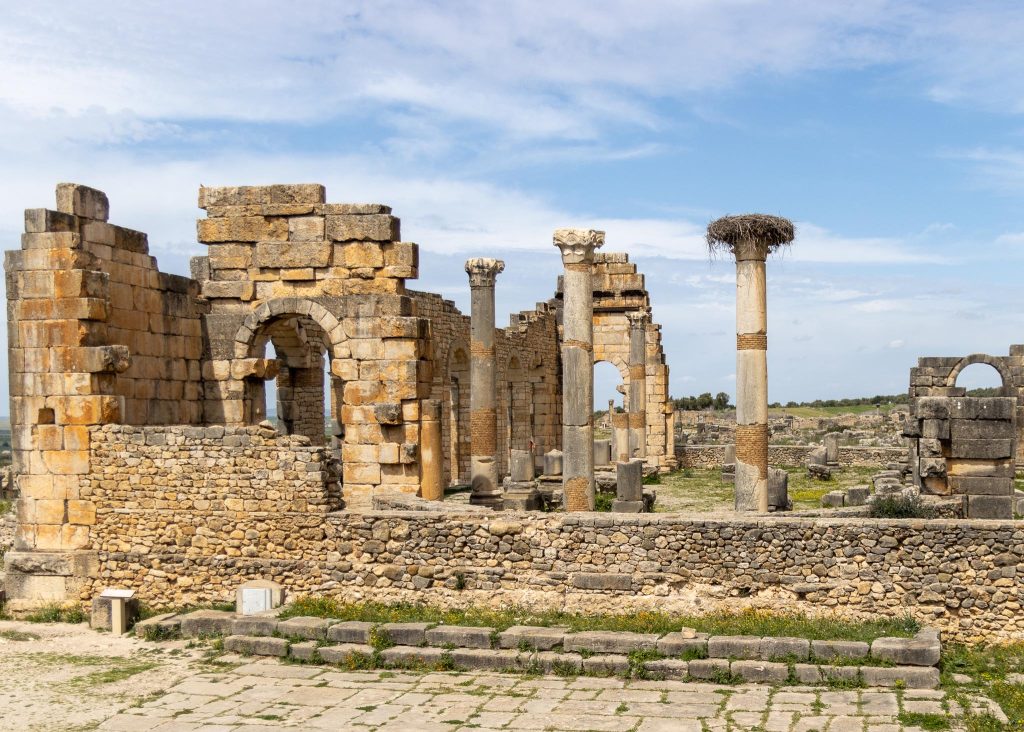
Roman Columns and Archways
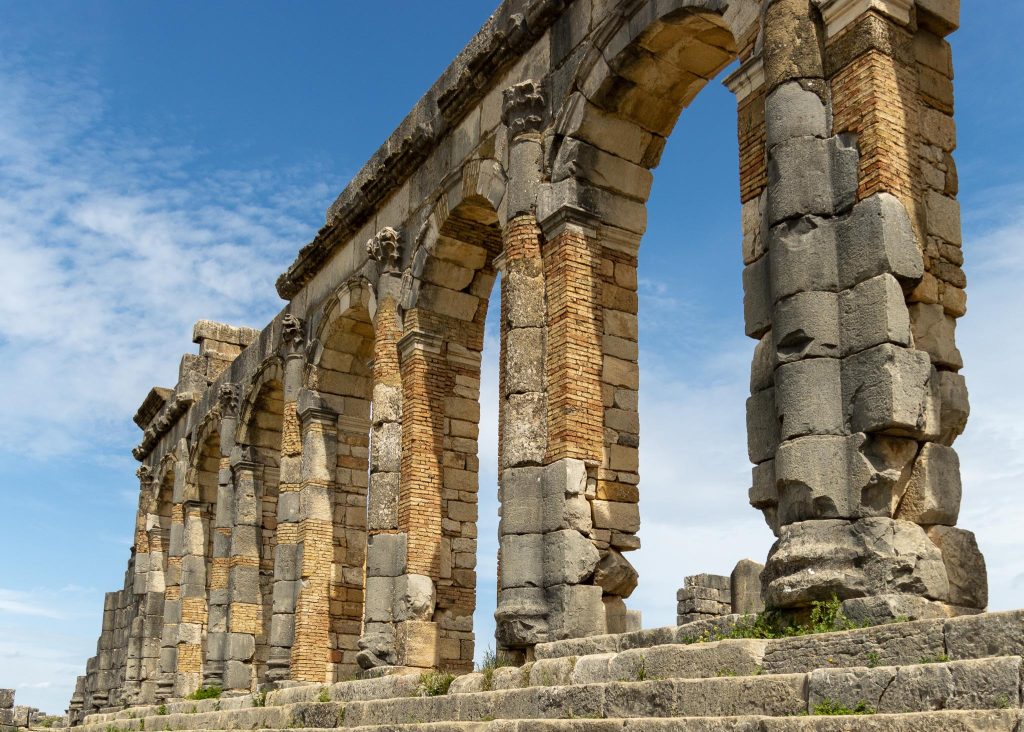
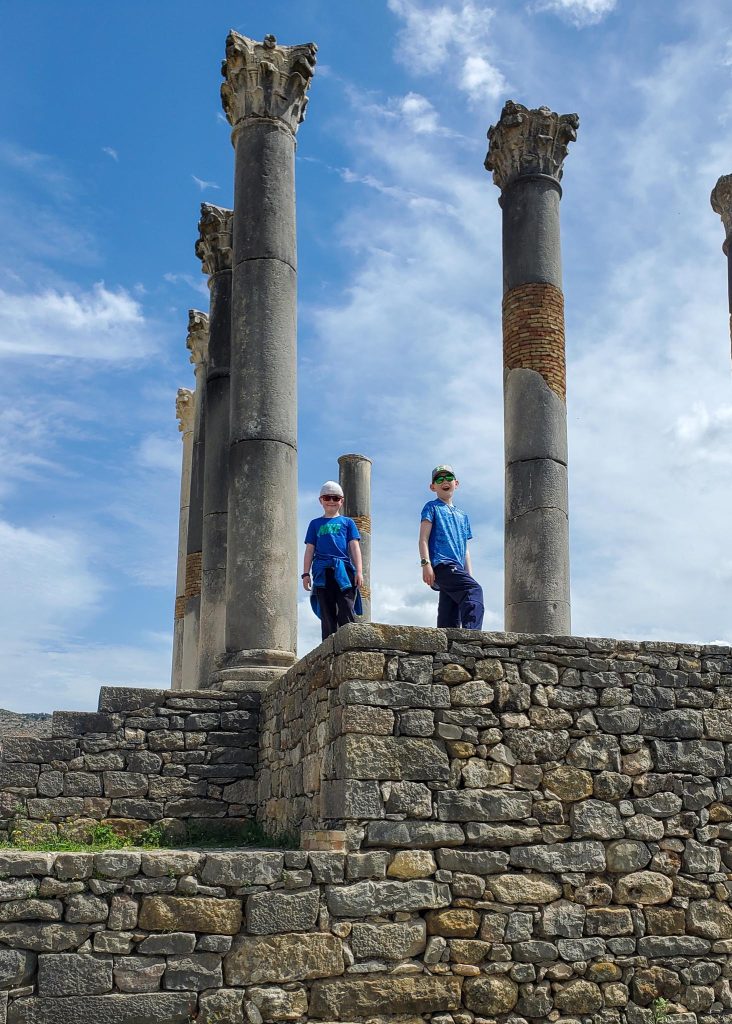
Tall stone columns still line the main roads, giving a sense of the city’s original scale. Walking between them, it’s easy to imagine bustling streets and civic gatherings.
Mosaics
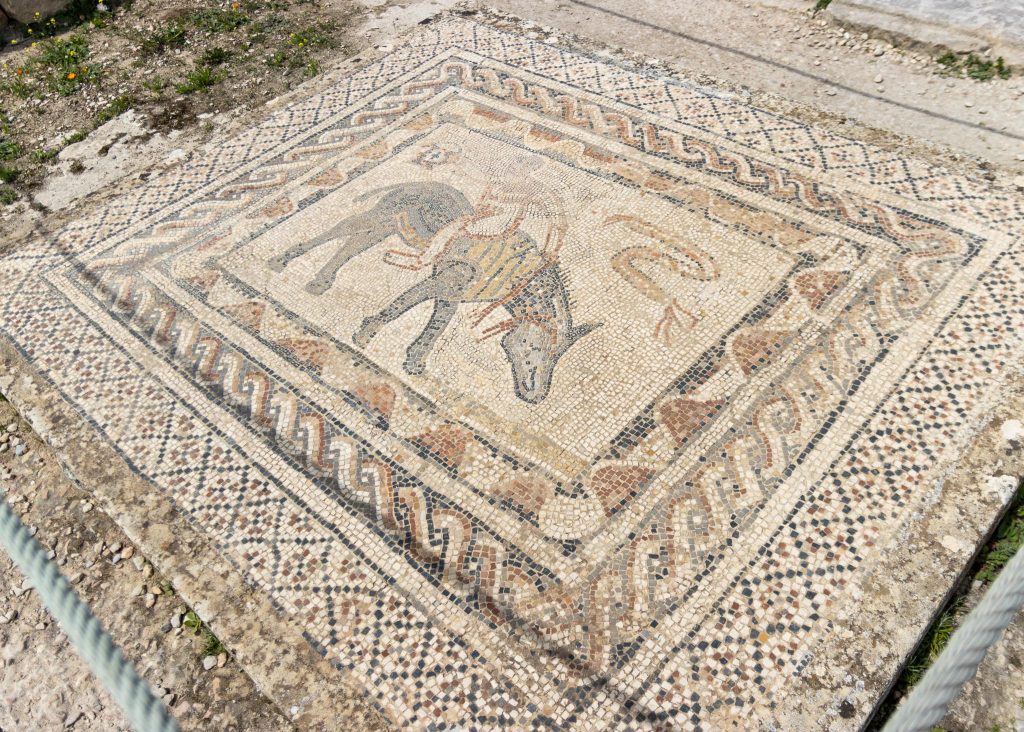
Several villas contain beautifully preserved floor mosaics depicting mythological scenes and everyday Roman life. The boys were especially drawn to the colourful, detailed, and surprisingly intact pieces of art.
Bathhouses and Aqueducts
Remnants of public bathhouses and water systems reveal how advanced the city once was. These structures help bring daily Roman life into focus, beyond just temples and monuments.
Residential Homes
The layout of former homes, complete with courtyards and decorative elements, made it easier to picture families living here.
Tips for Visiting with Kids
Start early to avoid the heat: Arriving early allows you to explore during the coolest part of the day and beat the crowds.
Bring sun protection and water: Hats, sunscreen, and water are a must.
Encourage exploration: Let kids wander through the ruins at their own pace. Our boys enjoyed climbing on and around fallen stones, finding the colourful mosaic tiles, and took time to read the information plaques scattered throughout the site. Giving them freedom to explore made the experience feel adventurous and kept them engaged.
Consider a guide: Guided tours are available for those wanting a deeper historical context. For our family, wandering the ruins on our own and soaking up the atmosphere was enough.
Timing: Give yourself two to three hours to explore.
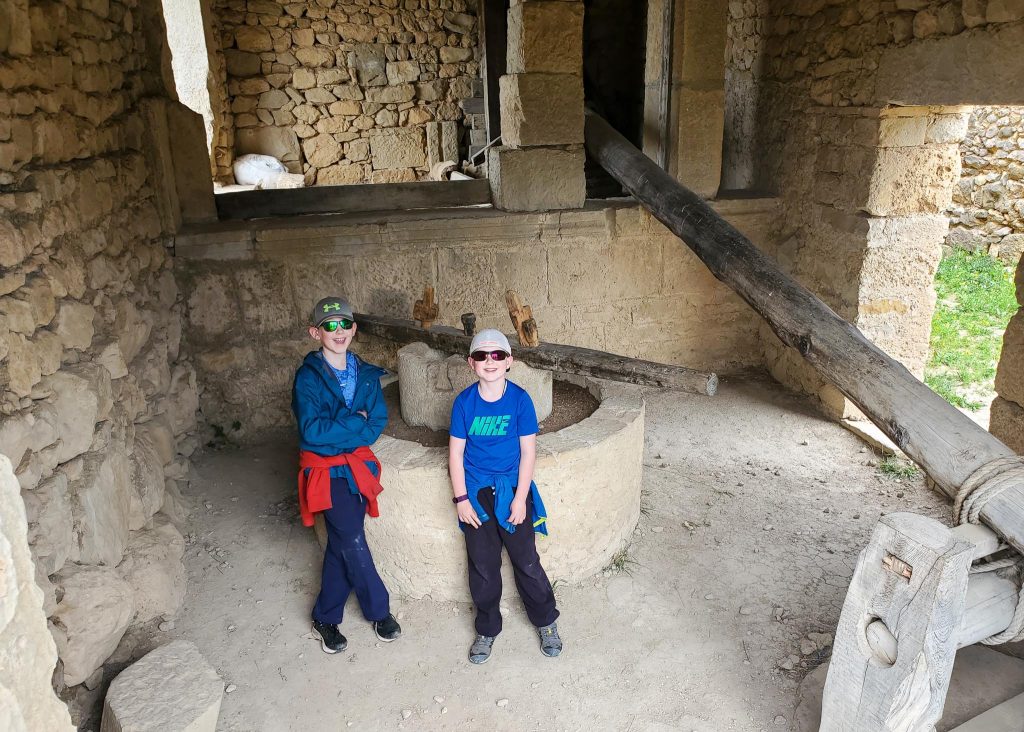
Hands-on learning: Volubilis offered an easy opportunity for worldschooling. Using the aqueduct system, we discussed Roman engineering and water management, and challenged the boys to trace where water once flowed through the city.
A Quiet Highlight of Morocco
For families travelling through northern Morocco, Volubilis is an easy and worthwhile stop. It offers history without heaviness, space to explore, and a reminder that Morocco’s story extends far beyond medinas and deserts—deep into the ancient world.
Looking for More Places to Explore in Morocco?
Check out these related posts to help plan your trip:
• 27-Day Morocco Road Trip Itinerary
• Exploring Marrakech Medina
• Exploring Dadès Gorge: A Family Hike the Monkey Fingers Trail
• Camel Trekking in the Sahara: A Family Adventure You’ll Never Forget